
July 17, 2024
New tool helps analyze pilot performance and mental workload in augmented reality
News2024-07-17
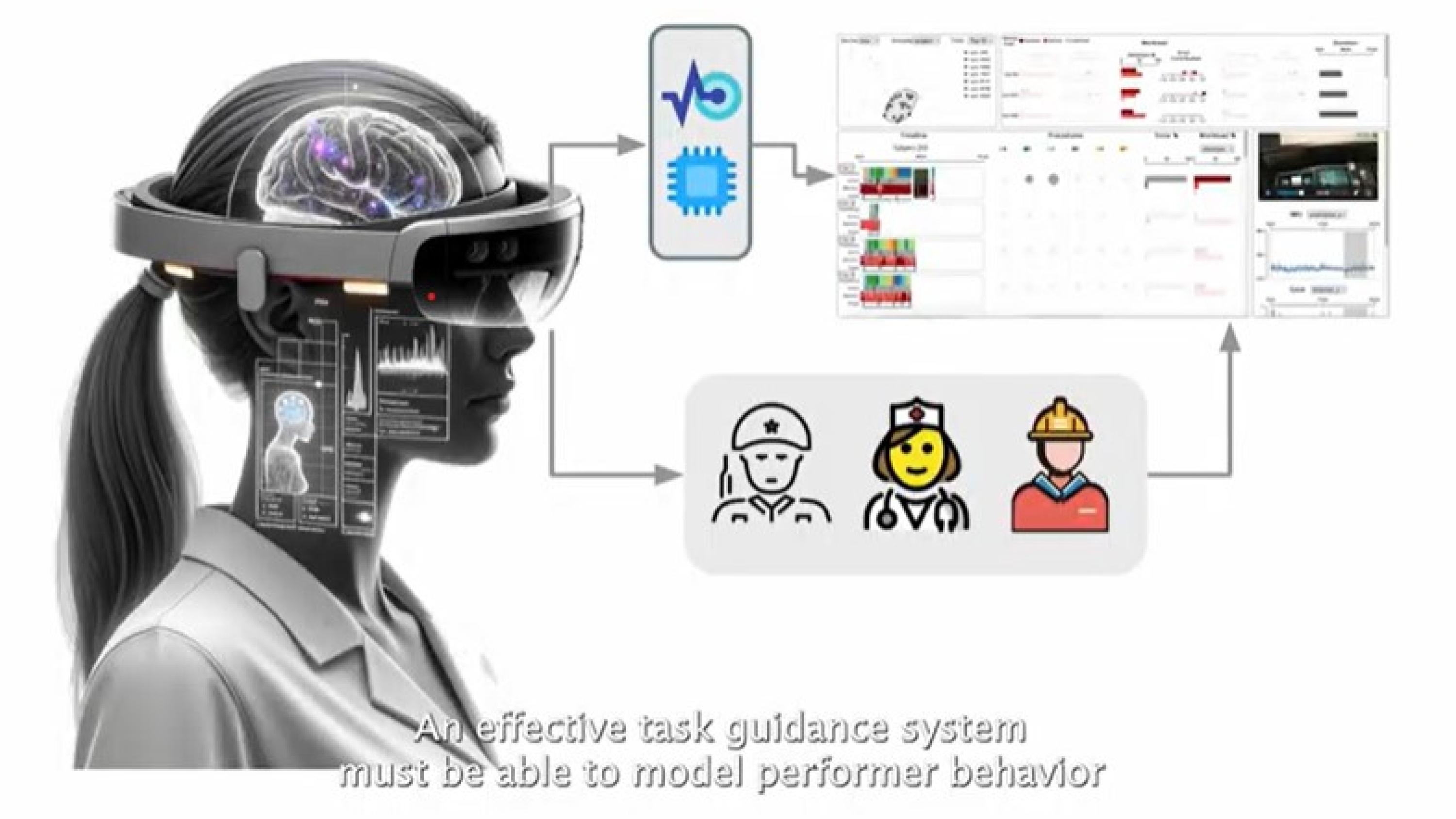
HuBar is a novel visual analytics tool designed to summarize and compare task performance sessions in AR — such as AR-guided simulated flights — through the analysis of performer behavior and cognitive workload.
In the high-stakes world of aviation, a pilot's ability to perform under stress can mean the difference between a safe flight and disaster. Comprehensive and precise training is crucial to equip pilots with the skills needed to handle these challenging situations.
Pilot trainers rely on augmented reality (AR) systems for teaching, by guiding pilots through various scenarios so they learn appropriate actions. But those systems work best when they are tailored to the mental states of the individual subject.
Enter HuBar, a novel visual analytics tool designed to summarize and compare task performance sessions in AR — such as AR-guided simulated flights — through the analysis of performer behavior and cognitive workload.
By providing deep insights into pilot behavior and mental states, HuBar enables researchers and trainers to identify patterns, pinpoint areas of difficulty, and optimize AR-assisted training programs for improved learning outcomes and real-world performance.
HuBar was developed by a research team from NYU Tandon School of Engineering that will present it at the 2024 IEEE Visualization and Visual Analytics Conference on October 17, 2024.
Pilot trainers rely on augmented reality (AR) systems for teaching, by guiding pilots through various scenarios so they learn appropriate actions. But those systems work best when they are tailored to the mental states of the individual subject.
Enter HuBar, a novel visual analytics tool designed to summarize and compare task performance sessions in AR — such as AR-guided simulated flights — through the analysis of performer behavior and cognitive workload.
By providing deep insights into pilot behavior and mental states, HuBar enables researchers and trainers to identify patterns, pinpoint areas of difficulty, and optimize AR-assisted training programs for improved learning outcomes and real-world performance.
HuBar was developed by a research team from NYU Tandon School of Engineering that will present it at the 2024 IEEE Visualization and Visual Analytics Conference on October 17, 2024.